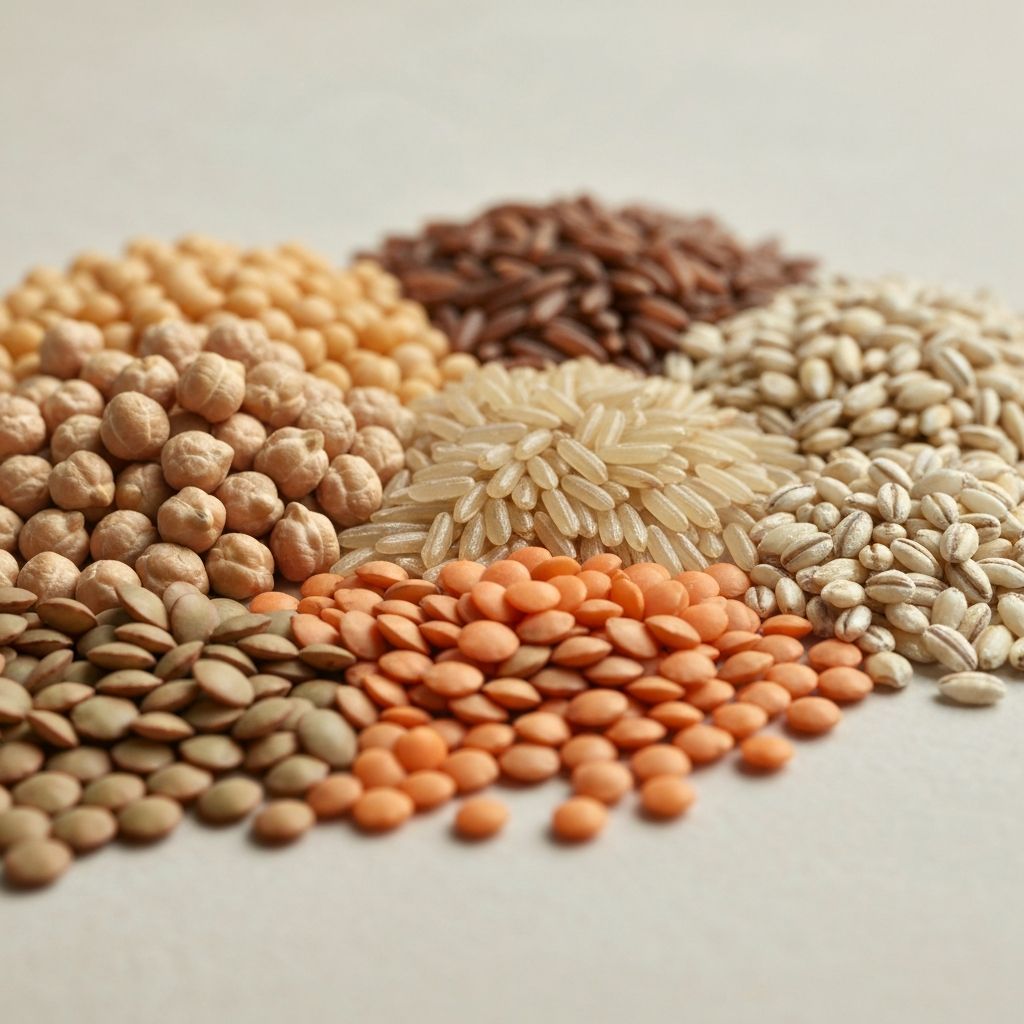
Amino Acid Profiles Across Common Protein Sources
Nutritional composition and amino acid diversity of dietary proteins
Protein Composition: Amino Acids
All dietary proteins are composed of amino acids—organic compounds that link together in long chains to form protein molecules. Twenty amino acids commonly occur in foods, nine of which are considered "essential" because the human body cannot synthesize them and must obtain them from diet.
The amino acid composition of foods varies substantially. Diverse protein sources differ in their relative amounts of different amino acids, creating nutritional differences that extend beyond simple protein quantity.
Essential Amino Acids
The nine essential amino acids are:
- Leucine — involved in muscle protein synthesis
- Isoleucine — branch-chain amino acid
- Valine — branch-chain amino acid
- Lysine — important in collagen synthesis and calcium absorption
- Methionine — contains sulphur; involved in glutathione synthesis
- Phenylalanine — precursor to tyrosine
- Threonine — important in immune function
- Tryptophan — precursor to serotonin and melatonin
- Histidine — important in immune function and myelin formation
A protein source that contains adequate amounts of all nine essential amino acids is called a "complete protein."
Animal-Based Protein Sources
Fish and Seafood
Examples: Salmon, cod, tuna, mackerel, shrimp
Amino acid profile: Complete protein; all essential amino acids present. Higher in omega-3 polyunsaturated fats (especially fatty fish). Rich in selenium and iodine.
Protein content: Approximately 20-25% per 100g cooked
Eggs
Form: Whole egg (yolk + white)
Amino acid profile: Complete protein with excellent balance of essential amino acids. Egg white is nearly pure protein with minimal fat; yolk contains fat, cholesterol, choline, lutein, zeaxanthin.
Protein content: Approximately 13% per whole medium egg, or 11% per 100g
Poultry
Examples: Chicken breast, turkey
Amino acid profile: Complete protein. Lean cuts are particularly high in protein relative to fat. B vitamins and minerals including niacin, selenium, phosphorus.
Protein content: Approximately 31% per 100g cooked (chicken breast)
Beef and Other Red Meat
Examples: Beef, lamb, pork
Amino acid profile: Complete protein. Contains higher saturated fat content than poultry. Rich in iron (particularly haem iron), zinc, B vitamins including B12.
Protein content: Approximately 25-27% per 100g cooked (varies by cut)
Dairy Products
Examples: Greek yoghurt, cottage cheese, milk, cheese
Amino acid profile: Complete proteins. Greek yoghurt and cottage cheese are particularly protein-dense. Contain calcium, vitamin D (if fortified), probiotics (in yoghurt).
Protein content: Greek yoghurt approximately 10-20% per 100g; cottage cheese approximately 11% per 100g
Plant-Based Protein Sources
Legumes
Examples: Lentils, chickpeas, black beans, kidney beans
Amino acid profile: Incomplete proteins; generally lower in methionine and tryptophan. When combined with grains (e.g., rice and beans), complement each other to provide all essential amino acids. Rich in fibre and polyphenols.
Protein content: Approximately 9% per 100g cooked (lentils); 8-9% (beans)
Nuts and Seeds
Examples: Almonds, walnuts, pumpkin seeds, sunflower seeds, chia seeds
Amino acid profile: Incomplete proteins; good amounts of arginine and other amino acids. Rich in healthy monounsaturated and polyunsaturated fats, minerals, and vitamin E.
Protein content: Approximately 20-25% per 100g (varies by type)
Whole Grains
Examples: Quinoa, oats, brown rice, wheat, barley
Amino acid profile: Incomplete proteins; generally lower in lysine. Quinoa is notable for being relatively complete. Rich in fibre, B vitamins, and minerals.
Protein content: Approximately 4-8% per 100g cooked (varies by grain)
Soy Products
Examples: Tofu, tempeh, edamame, soy milk
Amino acid profile: Complete proteins; contain all nine essential amino acids. Rich in isoflavones. Highly bioavailable.
Protein content: Tofu approximately 8% per 100g; tempeh approximately 19% per 100g
Bioavailability and Digestibility
The amino acid composition of a protein source is only part of the picture. Bioavailability—the extent to which amino acids are absorbed and available for use by the body—varies between sources.
Factors Affecting Bioavailability
- Digestibility: How easily the protein is broken down. Animal proteins are generally more readily digested than plant proteins.
- Antinutrient factors: Some plant proteins contain compounds that inhibit digestion (phytates, trypsin inhibitors). Cooking reduces these factors.
- Food matrix: The presence of fibre, fats, and other components influences protein digestion rates.
- Processing: Heat treatment, fermentation, and other processing methods affect protein structure and digestibility.
Animal proteins typically have high bioavailability; plant proteins may have lower bioavailability unless processed or combined strategically.
Dietary Context and Nutritional Complexity
Protein does not exist in isolation. Every protein source comes within a nutritional context—embedded in a package of fats, carbohydrates, minerals, vitamins, and phytonutrients. Choosing protein sources involves considerations beyond amino acid composition:
- Fat composition: Saturated vs. unsaturated fats; omega-3 content
- Micronutrient density: Vitamins, minerals, and antioxidants
- Fibre content: Plant sources often provide fibre
- Antinutrient factors: Compounds that may affect mineral absorption
- Sustainability and environmental impact: Resource intensity of production
- Accessibility and personal preferences: Actual consumption depends on palatability and practical availability
No Single "Best" Source
Different protein sources provide different nutritional profiles. Diversity—incorporating multiple sources—provides a broader spectrum of amino acids, micronutrients, and phytonutrients than relying on a single source.
Protein Complementarity
Plant-based proteins that are individually incomplete can be combined to create complete amino acid profiles. Classic combinations include:
- Rice and beans (legumes provide lysine; grains provide methionine)
- Bread and peanut butter (grain + legume)
- Hummus and pita (chickpea + wheat)
- Lentils and rice
These combinations do not need to occur in the same meal; over the course of a day, diverse plant sources contribute all essential amino acids.
Important Context
This article describes amino acid profiles and protein composition of common foods. It does not constitute nutritional advice or recommendations on protein intake. Individual dietary needs vary based on health status, activity level, age, and other factors. Consult healthcare professionals or registered dietitian-nutritionists regarding personal dietary decisions.